
Simple Home Updates That Boost Comfort and Convenience
Updated: Mar 24

If you love where you live and plan to stay there a while longer, great! But even a home you adore can start to feel less functional over time. Daily clutter, foot traffic, and changing routines can make a space feel tired or inefficient. In other words, your home might be due for a “glow-up” — not a cosmetic redo, but a few changes that improve how it functions and feels.
These small, strategic updates can make your home feel refreshed and easier to live in, without the mess or disruption of a remodel.

Improve flow and function.
Flow refers to how you move through your home and interact with it each day. When flow is off, you feel small points of friction — nowhere to set a bag, a chair that blocks a path, or storage that requires extra steps to reach everyday items. Walk through your home and notice where you pause, detour, or set things down. Those moments reveal where flow is interrupted.
Small adjustments can make a big impact: Keep pathways at least three feet wide, and add strategic “drop zones” (entry hooks, key trays, a side table within arm’s reach). Visual flow matters too: cluttered surfaces or inconsistent lighting can add visual strain, so keep your lighting in similar color temperatures and clear away items that crowd the room.

Invest in quality lighting.
Most rooms rely on a single overhead light source, which is functional, but not exactly comfortable. Swapping outdated fixtures for layered lighting — a mix of overhead, task, and accent lighting — can dramatically improve how a space feels. Dimmer switches add flexibility, while warmer high-CRI bulbs create softer, more natural light. Under-cabinet lighting and motion-detecting exterior lights can also boost visibility and safety without major electrical work.
Be smart with technology.
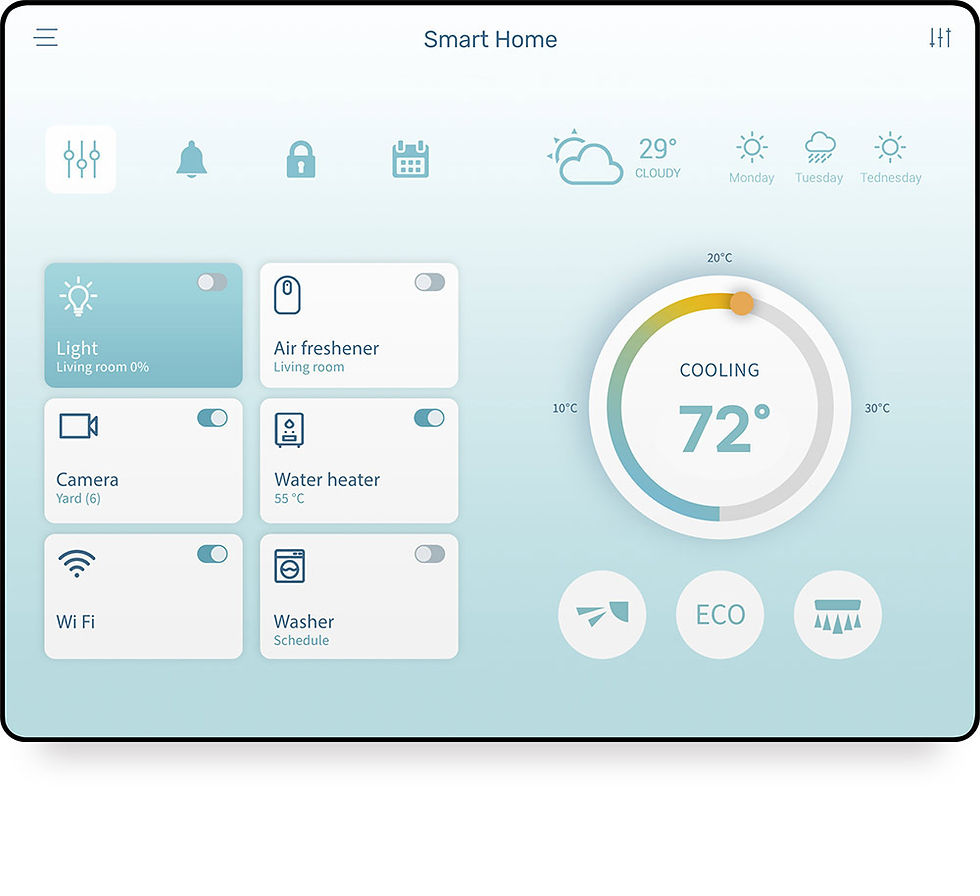
Smart home technology isn’t about gadgets; it’s about removing daily frictions. Start with smart lighting, which automates routines and creates presets for different times of day. A simple “welcome home” scene can turn on the entry, kitchen, and hallway lights the moment you arrive home each day. When it’s bedtime, your smart lighting can wind down with you, turning off main lights, dimming lamps, and setting the thermostat down a few degrees. Beyond lighting, water leak sensors and smart plugs add useful, low-cost automation.
The sounds of silence.

Quiet and privacy often go hand in hand. Upgrading to solid-core interior doors reduces sound between rooms, and adding weatherstripping around doors and windows helps block drafts and outside noise. Heavier window treatments can soften sound while improving privacy. Bookshelves or soft furnishings act as additional sound buffers, and rug pads can soften noise even further, making your home feel calmer and more contained.
The Takeaway
Improving your home doesn’t require a big-budget renovation. Small, intentional changes can make the home you love feel fresh again. Start with the upgrade you want most, and go from there. You might be surprised by the impact of one simple change.



Comments