
House Hunting? Why Climate Risk Should Be on Your Radar
Updated: Feb 13

Choosing the right home used to mean weighing schools, commutes, and square footage. Today, there’s another factor buyers can’t afford to ignore: climate risk.
From flooding and wildfires to extreme heat and hurricane winds, climate-related events are reshaping how we think about homeownership. These risks can affect everything from safety and insurance costs to long-term property value. Here’s what every homebuyer should know.
Climate Risk by the Numbers
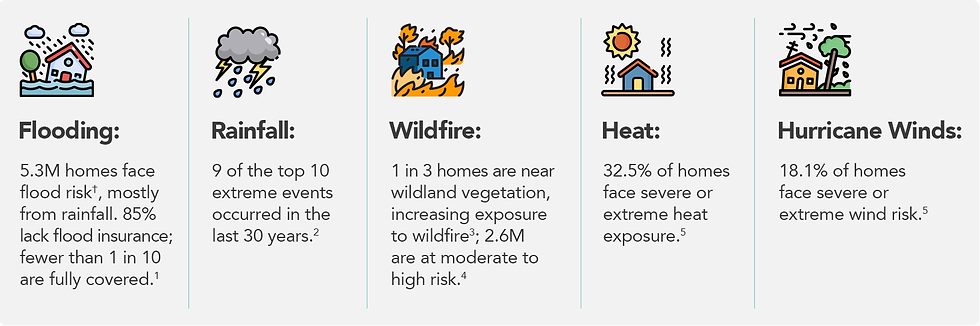
†Flood risk refers to a 1-in-100-year flood event from rainfall, river, or coastal flooding.
Why Does Climate Risk Matter for Homebuyers?
Climate risk can directly impact your finances, your home’s future value, and your safety. Insurance costs are rising, and some homes may require separate flood or earthquake coverage. Many homeowners are underinsured, which means they could face major out-of-pocket expenses after a disaster.
Beyond insurance, these risks can influence resale value as buyers and lenders increasingly factor them into decisions. And of course, there’s the personal risk of loss — to your property, your health, and your peace of mind.
Steps to Take Before You Buy:
Assess: Use online tools and local hazard maps to understand your exposure. Helpful resources include:
o FEMA Wildfire Risk Index - Identifies areas with elevated wildfire risk and estimates potential annual losses.
o ClimateCheck - Provides property-level climate risk scores for heat, flood, fire, and more, based on future projections.
o ClimRR “Local Projections” tool - Offers hyper-local forecasts for future temperature trends, flood frequency, and heat stress potential.
Budget for Insurance: Standard homeowners insurance doesn’t cover flood, earthquake, or wildfire damage. As you set your homebuying budget, factor in the cost of additional coverage. Get quotes early on so you have real-world numbers to work with.
Plan for Resilience: Think beyond the purchase price. If the home is in a wildfire-prone area, you may want to budget for defensible space landscaping, fire-resistant roofing, or ember-resistant vents. In flood-prone areas, elevating utilities or installing sump pumps can reduce damage. These upgrades can improve safety, lower insurance costs, and even boost resale value, so it’s smart to factor them into your financial planning before buying.
Think Long-Term: Climate risk impacts more than your property: It impacts your community. Ask about local infrastructure investments, such as stormwater systems, wildfire mitigation programs, or heat relief efforts. Find out if the area participates in resilience initiatives like FEMA’s Community Rating System (CRS), which can lower flood insurance premiums. A community’s preparedness can make a big difference in how well it weathers future climate events — and how your home holds its value over time.
Bottom line: Climate risk is now part of the homebuying equation, and knowledge is power. By understanding risks and planning ahead, you can make confident decisions that protect your investment and help you prepare for whatever the future brings.


Comments